
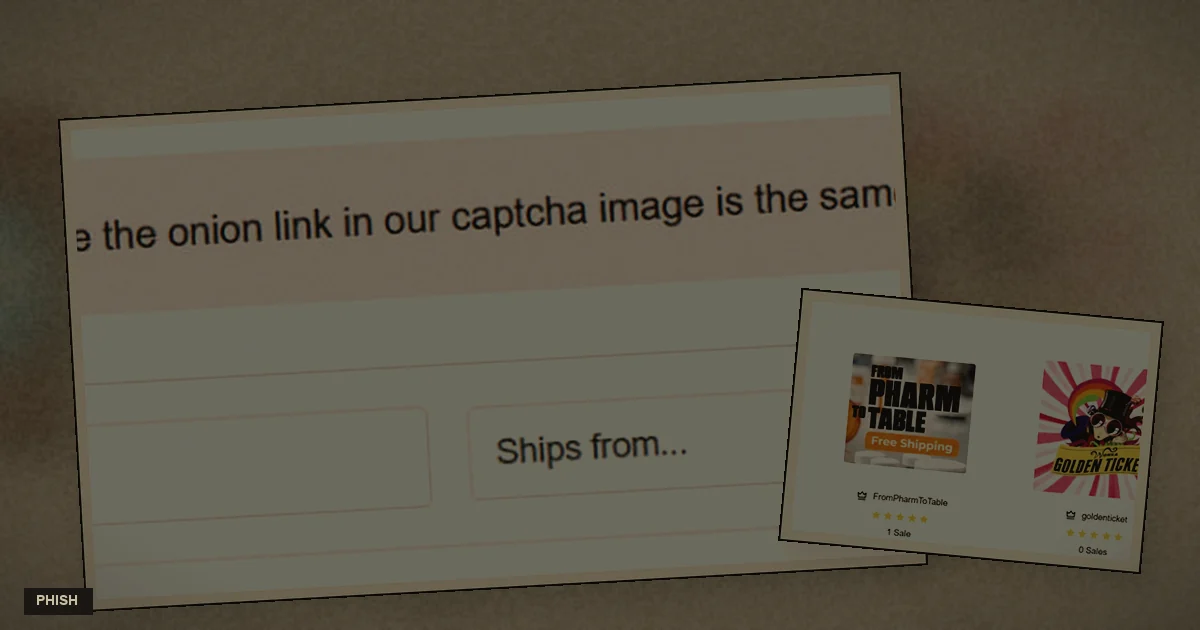
blackops onion
The query is a request for a secret-like string. Attackers buy ads and SEO pages to intercept people who searched blackops onion.
Search is the wrong trust root. A padlock on HTTPS proves a certificate was cheap, not that a hidden service is genuine.
Longer argument: clone surface.
Why blackops tor search results get intercepted
Because the searcher wants a paste. Pastes are valuable. Near-strings that survive a glance are cheap to mint.
URL shorteners, QR codes, Telegram bots, and week-old domains with ads are smells. Youth is not a verdict by itself. Operators burn domains too.
Obtain a name from a signed document you already had, then type it. Clicking snippets is how people donate credentials.
What a padlock does not prove in blackops darknet SEO
Certificates are cheap. Onions over Tor do not use the public CA system the same way.
Familiar CSS is the cheapest clone ingredient. Themes travel. Keys do not.
See mirrors for dated citations with the warning attached.
Why prefix-suffix glances fail
Can a blackops market lookalike survive a tired glance?
Yes. That is the industrial method. Mid-cluster reminder: a blackops onion near-string only needs to look 90 percent right.
Compare the full 56 characters. Length checks are not enough. Field note 03 restates that in memo form.
The searcher wants a paste. Pastes are valuable. Near-strings that survive a glance are cheap. Ads and SEO pages intercept that demand. Ranking is the trap.
Certificates are cheap. A padlock proves a cert. It does not prove a hidden service. Onions do not use the public CA system the same way.
Shorteners, QR codes, bots, and week-old domains with ads are smells. Youth is not a verdict by itself. Combine smells with missing signatures and conversion verbs.
Familiar CSS is the cheapest clone ingredient. Rebuild a layout from a screenshot in a weekend. Keys do not rebuild that way.
Obtain a name from a signed document you already had, then type it. Clicking snippets donates credentials. This cluster will not become a paid safe-list product.
Interception is the business model of the result set. Ranking a hedge inside that set does not convert the set into a safe neighborhood. Neighborhood is the wrong metaphor.
Padlocks will keep convincing tired eyes. Tired eyes are the budget attackers use. Rest, then compare. Do not authenticate with a glance at a lock icon.
Safe-list products will keep offering to do the compare for you. That offer is another interception. This cluster will not become that product to feel helpful.
Rebuild a theme in a weekend. Rebuild a key never. Keep that asymmetry in the foreground when CSS feels familiar and therefore true.
A hedge inside an interception set does not convert the set into a neighborhood. Neighborhood is the wrong metaphor and a dangerous comfort.
Offers to compare for you are another interception. Helpfulness is the costume. This cluster will not wear it as a paid list.
Comfort metaphors turn interception into a neighborhood. Neighborhoods have neighbors you can trust. Result sets do not. Keep the colder metaphor: it is an attack surface with some hedges in it.
Helpfulness as a paid compare-for-you list is interception with customer service. This cluster will not open that desk. Compare yourself against a signed publication.
Which phishing questions should stay sharp?
Why is this query so heavily phished?
Because people search when they want a string. Search is the wrong trust root. Attackers only need a near-string and a tired glance.
Is a padlock on HTTPS proof?
No. Certificates are cheap. A padlock on a wiki proves a cert, not a hidden service. Onions do not use the public CA system the same way.
Does familiar CSS mean you found the real site?
No. Familiar CSS is cheap to copy. A blackops market layout can be rebuilt from a screenshot. Compare keys, not palettes.
Phishing questions end where a 'safe list' product would begin. This cluster will not become that product.
If you still want a paste from search, you have not finished. The blackops onion snippet is doing a job. The job is interception.