
blackops onion
This desk cites categories of source rather than a fabricated bibliography. Readers who arrived on blackops onion searches deserve that honesty in the first paragraph. Many clearnet sites in this lane publish long reference lists populated with links that rot, get replaced by clones, or point to other affiliate overlays. An explicit source policy is more honest than that performance.
If a claim appears only on SEO-optimised blogs that cite each other, it is labelled as secondary chatter. If a claim requires a PGP signature to verify and this desk does not hold the key, we say so. Invented footnotes are a reliable tell of clone content.
The policy is deliberately conservative. A sparse, honest source sheet beats an impressive one that cannot be verified.
What blackops tor pastebins fail as sources
What this desk will cite: Tor Project documentation on v3 hidden services and browser behaviour; public-health harm-reduction material when discussing risk, never as product copy; journalism and threat-intelligence blogs when dated, with explicit caveats about lag and recursion in that ecosystem.
PGP-signed texts are cited if the reader can independently obtain the key from a channel they trusted before arriving here. This domain cannot create that trust from scratch. Public blackops tor pastes in Telegram channels or forums are not a key ceremony, and treating them as such is exactly the mistake phishing operations depend on.
What this desk will not pretend to have: internal vendor databases, uptime service-level agreements, verified buyer counts, or a private channel to the operator. Read intel reading for how to evaluate dashboards that sell that kind of certainty.
How blackops darknet round-ups simulate citation
The blackops darknet round-up economy works by flattening active, dormant, seized, and cloned markets into ranked tables, then selling placement on those tables. Tables feel like citations. They are typically late, paid for indirectly through traffic incentives, and circular — sources cite each other without tracing back to a primary.
The most useful primaries in this space are: dated screenshots with verifiable context, official law-enforcement announcements, and PGP-signed operator texts. The least useful sources — though the most abundant — are listicles titled with a year and a countdown of the top markets.
If an intelligence post withholds an onion address, that is often a deliberate and legitimate choice. Filling the gap from a search result is how phishing pages get built by people who think they are helping. See report reading for the longer argument.
When is a screenshot only an exhibit?
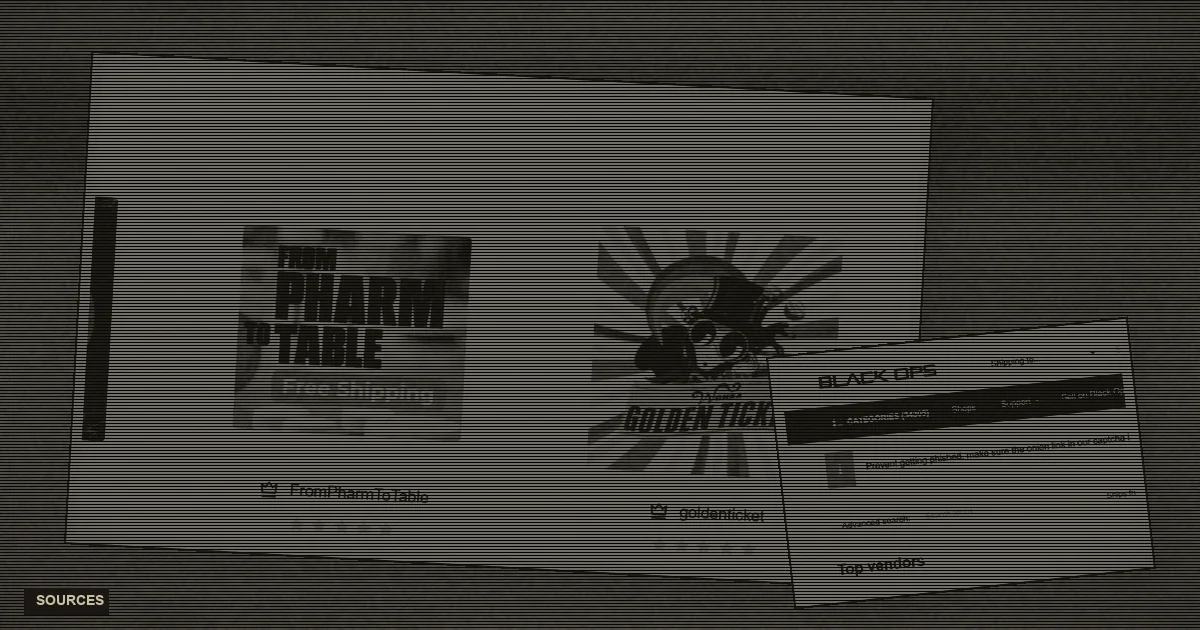
Citing a screenshot of a blackops onion market header does not make the screenshot a primary source for key verification. It is an exhibit of chrome — evidence that a particular interface existed at a particular moment, not evidence of who controls the key behind it. Themes travel freely.
Harm-reduction citations come from public-health agencies, pharmacology databases, and projects with editorial accountability. They are included so this site is not purely a traffic lure. They are not a catalogue of market listings, and they do not validate any particular vendor's claims.
When this sheet and a louder wiki disagree about a fact, prefer the dated primary source, not the word count. A claim without a genre label is unfinished work on this desk.
Genre tags are the actual citation system on this desk. A URL cemetery in this niche rots into clones. Prefer classes of source you can retrieve without this host as a middleman.
Dashboards that sell certainty are chatter sensors. They are useful the way weather apps are useful: late, recursive, and not a court. Vendor counts inside them remain marketing until a signed dump exists.
Screenshots of chrome are exhibits of chrome. They do not bind keys. A JPEG of a header can travel farther than the key that header once sat next to.
Public-health material belongs in a different stack from storefront banners. This host includes the former so it is not a pure lure page. It will not become a catalogue to earn that inclusion.
When a louder wiki disagrees with this sheet, ask which genre each used. Word count is not a genre. Dated primaries beat recursive listicles even when the listicle is prettier.
Source-policy questions that stay open
Why not publish a long reference list?
Because links in this ecosystem rot rapidly and get replaced by clones. Citing source categories and dated genres is more durable than a cemetery of URLs. Readers can locate Tor Project documentation without this host serving as an intermediary.
Do market tracker dashboards count as primary sources?
Rarely. They are useful as chatter sensors — evidence that a brand is still being discussed. They are not court records or operational databases. Vendor counts and uptime percentages should be treated as marketing claims unless a signed data dump exists.
Can a screenshot of a market storefront serve as a source?
It can be an exhibit of the interface as it appeared at a moment in time. It cannot authenticate a key. A picture of a market checkout page is still a picture. Compare strings to signed documents, not to pixel arrangements.
The source policy is a brake on everything else in this publication. If a later chapter sounds more certain than this page warrants, come back here and ask which source genre it used.
The blackops onion literature is crowded with confident claims. This sheet exists to give the noise a label. Labels are not verdicts, but they make reading less dangerous.