
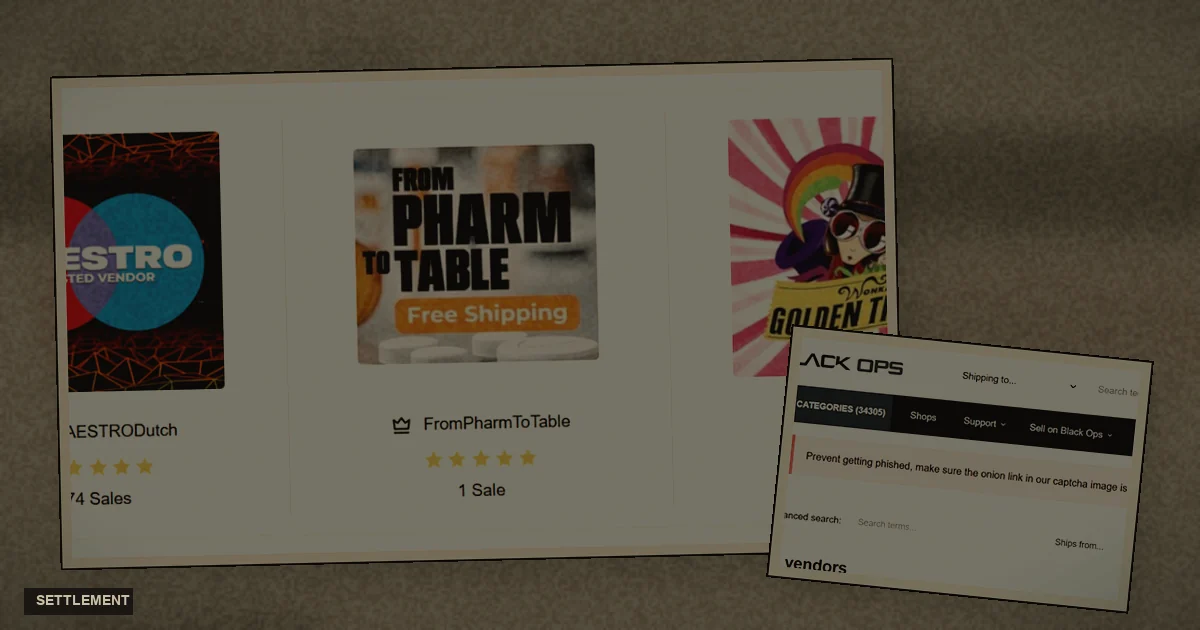
blackops onion
Markets in this space talk about coins. This section explains what that talk means to someone reading a report, not to someone funding a wallet. It is addressed to readers who searched blackops onion and encountered a sidebar full of cryptocurrency terminology without context.
Bitcoin's ledger is public and permanently readable by anyone with an internet connection. That single fact explains most of the subsequent marketing history: later platforms advertised Monero because a public ledger is a liability in this context. Marketing, however, is not chemistry, and a slogan about privacy rails is not a cryptographic proof.
When a write-up says a market is Monero-only, that sentence is a claim about policy. Believing it requires a signed rulebook from a key you already trusted, not a wiki entry that has been edited fourteen times.
How blackops tor articles compress protocol into slogans
Child pages on this desk stay in the same lane as this one: Monero as it appears in reporting and Bitcoin as historical context. Neither page publishes wallet addresses, mixer recommendations, or exchange rankings. Those are the monetisation mechanisms of clone pages, and they are absent here for that reason.
Public blackops tor explainers tend to collapse protocol properties into memorable slogans: untraceable, private by default, immune to chain analysis. Ring signatures and RingCT are real cryptographic primitives. The academic and vendor documentation describes strong default privacy, not immunity from every investigative technique. The slogan and the specification are not the same document.
This desk will not explain how to construct a Monero transaction. Protocol documentation lives at the Monero Project's own sites. Do not practise using a clone's suggested wallet.
Why blackops darknet histories use a two-act ledger narrative
The blackops darknet settlement narrative is a contrast story with two acts: early markets ran on a transparent ledger, later markets advertised a private one. That narrative is historiography, not a recommendation. It appears here because it is the dominant framing in reporting, and understanding it helps a reader parse why certain words keep appearing together.
Exit schemes in this industry frequently operate at the social layer rather than the technical one. Finalize-early pressure, manipulated dispute resolution, and fake vendor identities are human problems. A multi-signature slogan on a product page does not make those problems honest. See the escrow notes dossier chapter for more.
If a clearnet page or an email demands a cryptocurrency deposit to a freshly generated address, that is a recognisable theft pattern. This publication will not assist in completing it. Naming the pattern is as far as it goes.
What would actually verify a coin policy claim?
A note for readers who came here via the blackops onion query: coin talk around a brand name is still talk. Policy claims require signed rulebooks. A screenshot of a checkout page showing a Monero QR code is an exhibit of chrome, not a rulebook.
Readers who needed a how-to guide should leave this site now. Readers who needed vocabulary for parsing blog posts and trackers should continue to the child pages and stop there.
Nothing on this page or its children is legal, tax, or investment advice. What you may possess, transmit, or receive is governed by the law where you are. A field-manual theme in khaki stock cannot change that.
Coin vocabulary is a magnet for operational questions. This section names the magnet and then refuses the questions. Addresses, mixers, and exchange lists are how clones monetize the magnet.
Protocol properties do not belong to a brand. They belong to software many people run. A slogan that privatizes a rail is advertising, not a theorem you can check from khaki HTML.
Policy claims need signed rulebooks. Screenshots of checkout chrome are not rulebooks. Icons copy. Keys do not. Email with a fresh address is a theft pattern this manual will not complete.
Child pages exist so Bitcoin history and Monero design do not get mashed into one conversion paragraph. Mash is how phishing pages earn trust before the paste.
Nothing here is legal, tax, or investment advice. Local law governs possession and transmission. A field manual cannot launder that fact into a shopping reason.
Settlement questions this desk will not answer
Does this desk tell readers how to fund a market account?
No. Settlement pages record how public articles use cryptocurrency vocabulary. They do not publish wallet addresses, mixer suggestions, or exchange recommendations. That type of conversion copy is a reliable marker of clone and affiliate content.
Is a Monero-only policy a verified fact?
It is a circulating claim. Verification would require a signed policy document from a key you already trusted. Repeating the claim across multiple wikis does not transform it into a protocol fact.
Why mention Bitcoin at all in 2026?
Because older market histories still influence how writers frame current platforms. Understanding the contrast story helps a reader parse why certain slogans appear. Context is not endorsement, and mentioning a coin is not a recommendation to use it.
Settlement language attracts operational questions this publication will not answer. That attraction is deliberate on the part of phishing pages. This desk keeps the vocabulary and removes the steps.
If you need an address, go to mirrors. If you need a wallet guide, you will not find one here. The blackops onion reporting landscape can be read and understood without a checkout sequence.