
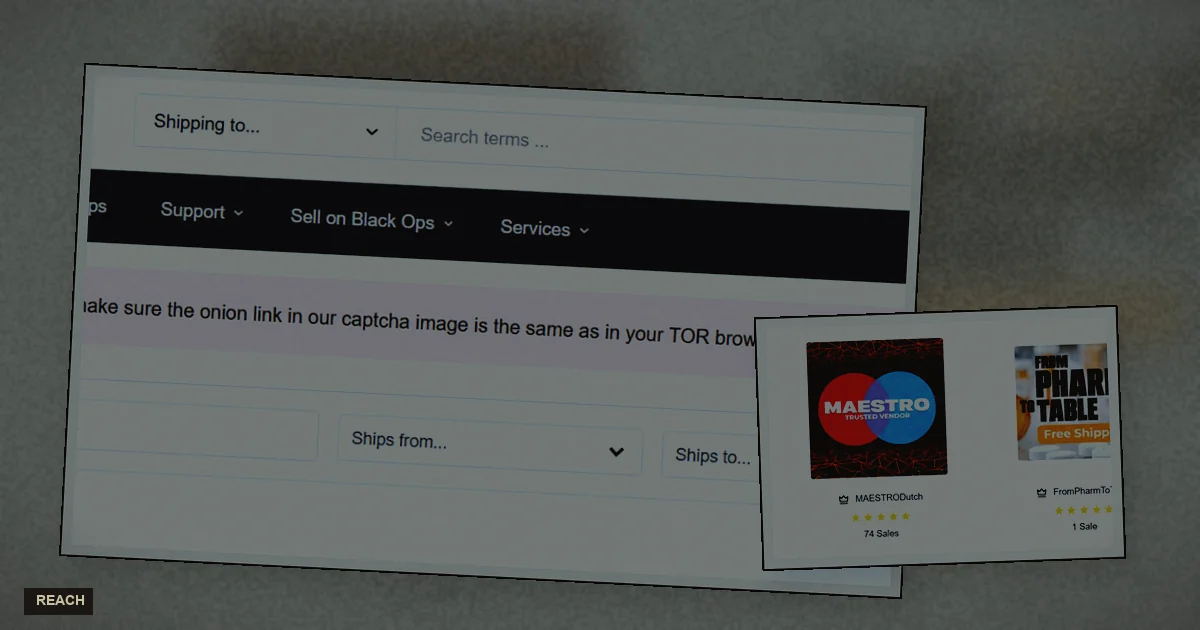
blackops onion
Reach, as this desk uses the word, means how hidden services are described in public technical documentation — not a login tutorial and not a shopping path. Tor Browser, distributed by the Tor Project at torproject.org, is the established client for reaching .onion addresses. Any installer offered on a random landing page is hostile until proven otherwise, because 'special market browsers' are a well-documented malware delivery pattern with a theme applied on top.
Reaching a blackops onion address means pasting a verified .onion string into Tor Browser and waiting for the circuit to establish. The security property is onion-to-onion encryption and self-authenticated naming — properties that hold regardless of what the interface CSS looks like.
This page describes the client you should already have, not a new one. It will not host binaries, offer a download, or redirect through a clearnet HTTP endpoint into the onion.
What blackops tor access pages get wrong about the browser
Public blackops tor explainers frequently skip what matters: the client already in your hands is the right one. Plugins, 'security packs,' and chat widgets that 'enhance access' expand the attack surface. Tor's safer settings exist to reduce whole classes of browser vulnerabilities by restricting JavaScript and blocking external font loads. Clone sites tend to demand the opposite configuration because a wider surface creates more capture opportunities.
JavaScript, remote fonts, and CAPTCHA theatres are all surface. Tor Project guidance defaults are conservative for good reasons. A page that insists you lower those defaults to proceed is not making your session safer.
If you find a clearnet HTTP page that promises to redirect you into the onion, assume someone is logging the click. The correct habit is to bookmark a full .onion string you verified from a signed source, then type it directly into Tor Browser. This desk cannot guarantee that any cited string still belongs to the operator tomorrow, but it can describe the check you should run.
Why blackops darknet VPN pitches mislead readers
The blackops darknet access-page genre has a recurring pattern: use a VPN, then open the site. That framing is misleading. Hidden services are reached through the Tor network, not through a VPN tunnel. VPN-only access pages are usually phishing operations with a billing model attached. The Tor network is not a product; it is a protocol, and Tor Browser is its reference client.
Tails and Whonix exist as amnesic and isolation operating systems. Mentioning them is not equivalent to providing a setup guide. Read their respective documentation on their own sites. This host is not a mirror of those projects and will not walk you through installation.
Further reading within this publication: client questions and the client-hardening dossier chapter. Both decline to recommend custom browser bundles from unknown sources.
Which addresses does this reach page currently cite?
Working citations on this desk, dated 1 Sep 2026. Re-verify against a signed source before acting on them.
- Mirror 1
http://blacko5kve23xdtgvwdbryyiahsvscys2xfpysoatszomalaw4qeygqd.onion - Mirror 2
http://blackodu3gly6id6o62geteov7gmwxq73xktgeq47n7ki6ncr5ewkuid.onion - Mirror 3
http://blackofpx7256x3pl5wgv2pgmunedz7mcbkhnr2liowqghramckwq7id.onion
Three addresses appear here, not one, because operators in this niche routinely publish several v3 identifiers so that a relay outage or block does not constitute a total loss. An undated fourth address from an ad or a forum screenshot is not part of this set. Compare every character of every string, not just the opening and closing segments.
A note for readers who came here specifically on the blackops onion query: this clearnet page does not deliver an address the way a download delivers a file. Listing the strings is a dated research citation, not a product. Clicking from a search result without a prior verification step is how people hand their credentials to a lookalike.
Reach writing in this niche usually turns into a login map by paragraph four. This sheet stops before that map. The client you already have from the Tor Project is the one public documentation describes. Extra packs are a different industry.
Clearnet redirects that promise to drop you into a hidden service are a capture pattern. Someone wanted the click on HTTP. Bookmarking a name you verified elsewhere is a hygiene habit, not a product this host sells.
Isolation systems such as Tails and Whonix have their own documentation, their own threat models, and their own release channels. Pointing at them is not a wizard. Forking them into a khaki skin would be a hostile act.
If a page needs you to enable every slider to continue reading, the page is teaching you its preference, not Tor's. Safer settings exist because browser bugs exist. Clones hate those settings because captchas and chats need a fatter client.
Working citations on this desk remain dated. They remain unverified by this domain. Reach is description. It is not delivery of a string as a product, even when the string is printed for research.
Reach questions that should stay unanswered
Does using this brand require a specialised browser?
No. Public guidance from the Tor Project is to use Tor Browser, full stop. Third-party hardened bundles offered on market-adjacent pages are a recognised malware delivery vector. Any landing page that hosts a market-specific installer should be treated as hostile by default.
Is a VPN a substitute for Tor when accessing this type of service?
No. VPN-only access pages are almost always phishing operations. Hidden services are reachable only through the Tor network. A VPN may be part of a broader personal setup, but it does not replace onion-name resolution or address verification.
Why list addresses on a reach page at all, given the risk of promoting phishing?
Because readers look for them, and a deliberate silence sends them to worse sources. Publishing with a date, a confidence label, and an explicit warning is a research choice. It is not a warranty that the operator still controls those keys at the moment you read this.
This section ends where operational shopping steps would begin. If a paragraph starts explaining how to complete a purchase or fund an account, it has left the scope of this publication and become part of the problem it describes.
The blackops onion search query will continue attracting access pages of every quality level. This one would rather describe the client you should already have than invent a storefront in khaki stock.